Few pieces of World War II equipment are as instantly recognisable as the American tanker helmet. With its rounded shell, padded ridges and leather ear flaps, the M1938 tanker helmet looks more like an early football helmet than military headgear, and that is no coincidence. Here is the story of how it came to be, how it was used, and why it remains a favourite with collectors and reenactors today.

Why Tank Crews Needed Their Own Helmet
Life inside an early tank was cramped, noisy and violent. Crews were thrown against hard steel surfaces every time the vehicle hit a bump, and standard steel helmets were too heavy and bulky for the confined space. The US Army needed something lighter that would protect the head from knocks inside the vehicle and leave room for communication equipment.
A Helmet Inspired by Sport
The Army turned to the sporting goods industry, which already understood how to make light, padded head protection. Rawlings, a well-known maker of sports equipment, developed the design, and a patent for the tank helmet was filed in 1941. The "M1938" name refers to the year the project began rather than the year the helmet entered service.
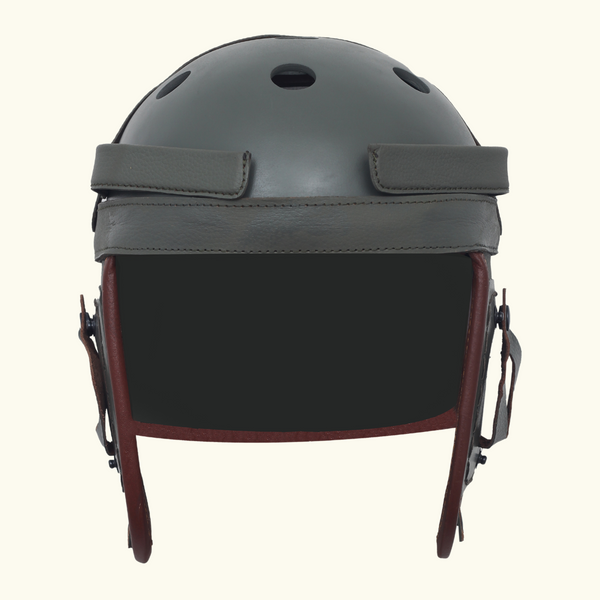
The result was a lightweight helmet with a hard fibre shell, padded ridges for impact protection and an internal suspension that kept the shell off the head. Its most distinctive feature was the leather ear flap assembly, which made room for the headphones crews needed to communicate over the roar of the engine.
The M1938 in Service
The helmet was issued to American armoured crews throughout the Second World War and became closely associated with US tank units in Europe and the Pacific. Several manufacturers produced it, and original examples still turn up with different maker markings. Crews often paired it with goggles to protect their eyes from dust and debris when riding with hatches open, a look that has become iconic in photographs and films of the era.
Because it was designed for knocks inside the vehicle rather than for shrapnel, many crews kept a steel helmet nearby for when they dismounted. That practical, two-helmet approach is part of what makes the tanker helmet so interesting to historians.
Why the M1938 Is So Popular Today
- Collectors value it as one of the most distinctive pieces of WW2 American kit.
- Reenactors need an accurate tanker helmet to complete a tank crew or armoured unit impression.
- Vintage vehicle owners wear it as a WW2 jeep helmet at shows and parades.
- Film and display: it is a striking display piece for a military history collection.
Original helmets are increasingly rare and expensive, and many are too fragile to wear. That is why most people who want to wear or display one choose a quality reproduction.
Choosing an M1938 Tanker Helmet Reproduction
When buying a reproduction, look for:
- Leather ear flaps and neck guard that match the original layout
- A padded interior so it is comfortable to wear for a full event
- An adjustable chin strap for a secure fit
- The right size: originals were made in several sizes, so check the fit before you buy
Our US M1938 Tanker Helmet reproduction is handcrafted with full grain leather ear flaps, neck guard and padding retainers, and fits head sizes up to US 7 1/2 (60cm). It is made for collectors, display and reenactment, and is not certified protective headgear. You can find it in our M1938 Military Helmet collection.
Frequently Asked Questions
Why is it called the M1938 if it was patented in 1941?
The designation refers to the year the development project started, not the year the helmet was patented or issued.
Who made the original M1938 tanker helmet?
Rawlings developed the design, and several manufacturers produced helmets during the war.
Did the tanker helmet protect against bullets?
No. It was designed to protect crews from knocks inside the tank, not from bullets or shrapnel.
Is a reproduction suitable for reenactment?
Yes. A good reproduction is ideal for reenactment and display, and saves wear on rare originals.
What size tanker helmet should I buy?
Measure around your head just above the eyebrows and compare with the product sizing. Ours fits up to 60cm (US 7 1/2).
Orders to the UK, US, Canada and Europe ship free with tracked, duty-paid delivery. If you are buying for a history enthusiast, see our leather gift guide for him.