If you work with hot metal, a good leather apron is the first piece of kit you buy and the last one you replace. But walk into any forge or fabrication shop and you will hear two names used almost interchangeably: the blacksmith apron and the welding apron. They look similar, they are both made from thick leather, and they both protect you from heat. So which one do you actually need?
In this guide we break down the real differences, explain which jobs each apron is built for, and help you choose the right leather apron for your workshop.

What Is a Blacksmith Apron?
A blacksmith apron is designed for forging: heating steel in a fire or gas forge and shaping it with a hammer and anvil. The main hazards are radiant heat from the forge, hot scale flying off the work, and the occasional spark from grinding. Blacksmiths also move a lot, bending over the anvil, reaching into the forge and walking between stations.
Because of that, a blacksmith apron usually has:
- Thick, hard-wearing leather across the chest and thighs, where heat and scale hit most often
- Cross-back or adjustable straps that spread the weight across your shoulders instead of your neck
- Pockets for chalk, pencils, punches and small tools
- A length that covers the thighs, often split at the bottom so you can stride and kneel freely
What Is a Welding Apron?
A welding apron is built for arc, MIG, TIG and gas welding, where the hazards are different. Welding throws molten spatter and slag, produces intense UV light, and often happens at a bench where the work is close to your chest and lap.
A welding apron therefore tends to have:
- Full bib coverage high up the chest, because spatter often lands right below the neck
- Fewer or covered pockets, so hot slag cannot collect inside them
- A smooth, closed front without folds or seams where spatter can lodge
- Longer length to protect your lap when you weld seated

Blacksmith Apron vs Welding Apron: The Key Differences
| Feature | Blacksmith apron | Welding apron |
|---|---|---|
| Main hazard | Radiant heat, hot scale, sparks | Molten spatter, slag, UV light |
| Coverage | Chest to mid-thigh | High bib, often longer for seated work |
| Pockets | Usually several | Few or covered |
| Straps | Cross-back for all-day comfort | Neck or cross-back |
| Best for | Forging, knife making, farriery | MIG, TIG, arc and gas welding |
Which One Should You Choose?
Choose a blacksmith apron if you mainly forge
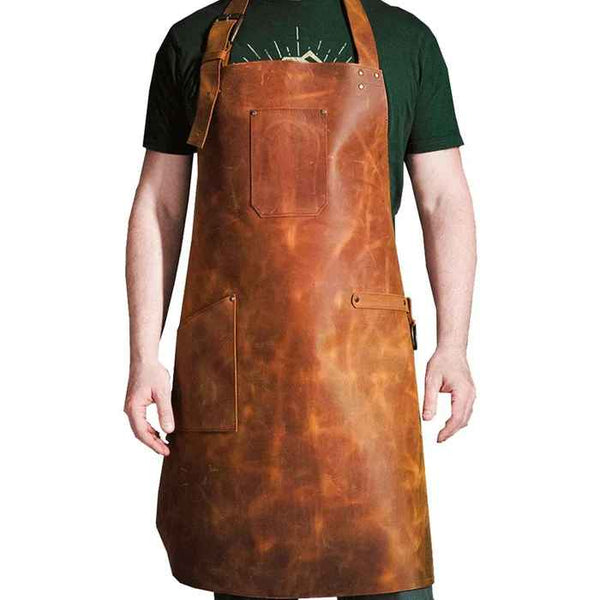
If most of your time is spent at the forge and anvil, making knives, hooks, tools or decorative ironwork, the extra pockets and freedom of movement of a blacksmith apron will serve you best. Our Full-Grain Leather Classic Apron and Leather Work Apron with Pockets are popular with smiths for exactly this reason.
Choose a welding apron if you mainly weld
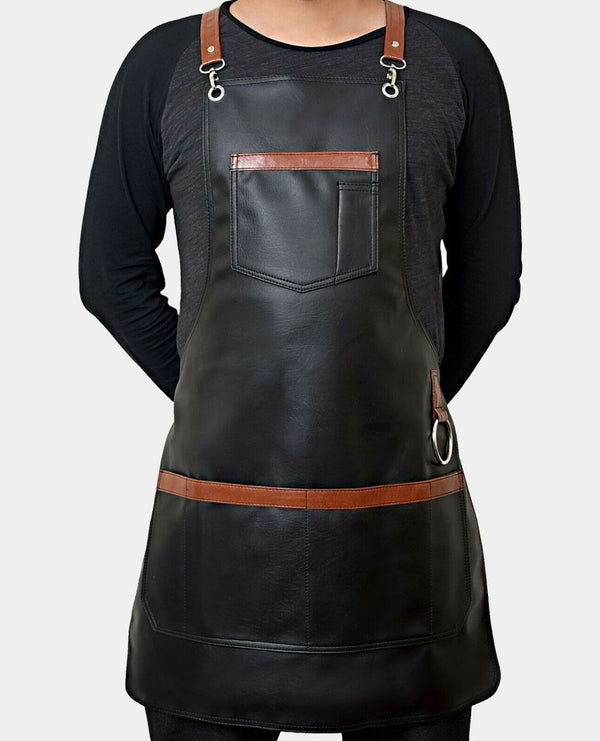
If you spend most of your time with a torch or welding gun, prioritise high chest coverage and a clean front. A bib-style apron such as our Cross Back Black Leather Apron keeps spatter off your chest while the cross-back straps keep the weight off your neck during long sessions.
Do both? Pick an all-rounder
Many workshops do a bit of everything. In that case, look for full grain leather, a high bib, cross-back straps and pockets with flaps. That combination handles the forge and the welding bench equally well. You can browse all our options in the blacksmith apron and welding apron collections.
Why Full Grain Leather Matters
Whichever style you choose, the leather itself does most of the work. Full grain leather is the strongest layer of the hide. It resists heat, does not melt like synthetic fabrics, and stands up to years of sparks, scale and abrasion. It also moulds to your body over time, so a good apron gets more comfortable the more you wear it. If you want to understand the difference between leather grades, read our guide to full grain vs top grain leather.
A Note on Safety
A leather apron is an important layer of protection, but it is not a complete safety system. Always wear proper eye and face protection, gloves and closed footwear, and follow the safety requirements for your workplace or the equipment you use.
Caring for Your Leather Apron
- Brush off scale and dust after each session
- Wipe with a damp cloth if needed and let it dry naturally, away from direct heat
- Condition the leather every few months to keep it supple
- Hang it up rather than folding it, so the leather keeps its shape
Frequently Asked Questions
Can I use a blacksmith apron for welding?
Yes, for occasional welding. For regular welding, a higher bib and covered pockets give better protection against spatter.
Can I use a welding apron for blacksmithing?
Yes. A welding apron protects well at the forge, although you may miss the extra pockets and freedom of movement of a blacksmith apron.
What leather thickness is best for metalwork?
Thick, full grain leather offers the best balance of protection and durability. Very thin leather wears through quickly around hot work.
Are cross-back straps better than a neck strap?
For long sessions, yes. Cross-back straps spread the weight across your shoulders and back, which reduces neck strain.
Can I get an apron made to my size?
Yes. Many of our aprons can be customised. Contact us before ordering with your measurements and requirements.
Find Your Apron
Ready to choose? Browse our full range of handcrafted leather aprons, including blacksmith, welding and woodworking styles. Orders to the UK, US, Canada and Europe ship free with tracked, duty-paid delivery.