This guide is for consenting adults aged 18+.
A collar is the most recognisable symbol in BDSM. For some people it is a fun accessory for a scene; for others it represents a deep, committed relationship. This guide explains the main types of BDSM collars, what they mean, what "collaring" is, and how to choose and fit a collar safely.
What a collar means · Types of collars · What is collaring? · Collaring ceremonies · Choosing a collar · Fit and safety · FAQ
What does a BDSM collar mean?
In a dominant/submissive (D/s) dynamic, a collar is a symbol of the relationship between the person wearing it and the person who gave it. Depending on the couple, it can mean:
- Ownership and belonging: the submissive belongs to the dominant within the dynamic.
- Commitment: similar to an engagement or wedding ring in more serious relationships.
- Protection: the dominant takes responsibility for the submissive's wellbeing.
- A mindset switch: putting the collar on marks the start of a scene; taking it off marks the end.
There is no single correct meaning. What matters is that both partners agree what their collar stands for.
Types of BDSM collars
| Collar | What it is | Typical use |
|---|---|---|
| Play collar | A collar worn only during scenes, often with a D-ring for a leash | Beginners, casual play |
| Training collar | Given during a trial period before a long-term commitment | New D/s relationships |
| Formal collar | The "wedding ring" of BDSM, given at a collaring ceremony | Committed, long-term dynamics |
| Day collar | A discreet piece (choker, necklace, bracelet) wearable in public | Everyday reminder of the dynamic |
| Protection collar | Shows a submissive is under someone's care, not necessarily romantic | Community events, mentoring |
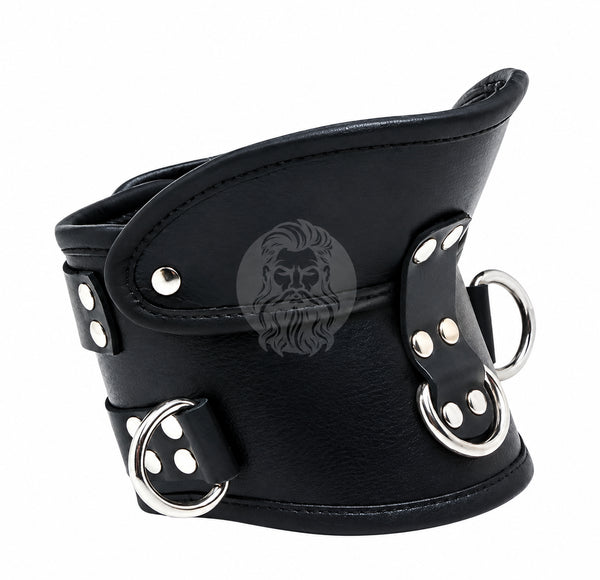
| Posture collar | Tall, stiff collar that keeps the chin raised | Discipline and presentation scenes |
| Locking collar | Closes with a small padlock; only the key holder can remove it | Experienced couples, symbolic control |
| Pet play collar | Collar with tag or ring, often matched with a leash | Pup, kitten and pony play |
You can browse every style in our leather BDSM collar collection, from simple play collars to a posture collar with three D-rings.
What is collaring in BDSM?
Collaring is the act of a dominant offering a collar to a submissive, and the submissive accepting it. It formalises the relationship. Most dynamics move through stages:
- Considering: both partners are getting to know each other and negotiating limits. No collar yet.
- Training or protection collar: a trial period to see whether the dynamic works.
- Formal collar: a long-term commitment, often marked with a ceremony.
Being "collared" means a submissive has accepted a collar from a specific dominant. A "self-collared" person wears a collar to express their own identity without belonging to anyone.
What happens at a collaring ceremony?
A collaring ceremony can be private or shared with trusted friends. Couples often agree a written contract beforehand covering roles, limits and expectations, then exchange vows or promises as the collar is fastened. Afterwards there is usually a celebration and plenty of aftercare. Some couples renew the ceremony each year.
How to choose a BDSM collar
- Material: full-grain leather is comfortable, durable and softens to the neck over time. Avoid thin chains or cords.
- Width: wider collars spread pressure better. 3–5 cm is comfortable for most people.
- Lining: padded or soft-lined collars are best for long wear.
- Hardware: look for solid buckles and welded D-rings if you plan to attach a leash.
- Purpose: a discreet day collar for public, a sturdier play collar with a leash ring for scenes. A collar and leash set is an easy way to start.
If you are just starting out, read our guide to the best leather BDSM collar for beginners, or learn more about how a slave collar is used in BDSM play.
Collar fit and safety
- Two-finger rule: you should be able to slide two fingers flat between the collar and the neck.
- Never pull hard on a leash attached to the neck. Leash play should be gentle guidance, not pulling.
- Never tie a collar or leash to a fixed object, and never leave a collared person alone in restraints.
- Posture collars should be worn for short periods only, as they hold the neck in one position.
- Locking collars: keep a spare key or safety shears nearby.
- Remove for sleep unless the collar is soft, loose and designed for 24/7 wear.
Collars pair naturally with wrist restraints. If you want to add cuffs, our guide to handcuff sex positions and how to use handcuffs in bed is a good next read.
Caring for a leather collar
Wipe the collar with a soft, slightly damp cloth after use, let it dry naturally away from heat, and apply leather conditioner every few months. Store it flat or hanging, out of direct sunlight.
Frequently asked questions
What does it mean to be collared?
Being collared means a submissive has accepted a collar from a dominant, formalising their D/s relationship. The exact meaning is agreed between the two partners.
What is a day collar?
A day collar is a discreet collar, such as a choker, necklace or bracelet, that can be worn in public as a private reminder of the relationship.
Can anyone wear a BDSM collar?
Yes. Many people wear collars as fashion or self-expression. In community spaces, though, a collar can signal that someone is in a dynamic, so be aware of the message it sends.
What is the difference between a play collar and a formal collar?
A play collar is worn only during scenes and carries no long-term commitment. A formal collar represents a committed relationship and is usually given at a ceremony.
How tight should a BDSM collar be?
Snug but comfortable, with room for two fingers flat underneath. It should never press on the throat or restrict breathing.
Who chooses the collar, the dominant or the submissive?
Traditionally the dominant chooses and gives it, but many couples choose together so the collar is comfortable and fits the submissive's lifestyle.
Final thoughts
A collar can be a playful scene accessory or a lifelong symbol of commitment. Whichever it is for you, talk openly about what it means, choose a comfortable, well-made leather collar and always put safety first.